How Chelsea Actually Gets Paid
I’ve supported Chelsea my whole life. For most of it, I only thought about the club’s money when a transfer fee made headlines, never about when the cash arrived.
These days I spend a lot of time on quote to cash. The fairly unglamorous trip a sale takes from signed contract to money in the bank.
So when Chelsea published its 2024/25 accounts,1 I read them a little differently.
Big numbers, but they don’t tell you where the money is. I think the better question is when each sale became cash. A sale and its payment can be a long way apart. Look at Chelsea that way and the accounts get much easier to follow.
Three pieces of paper
The way I see it, every sale ends up on three pieces of paper. The contract says what was agreed. The accounts say what has been earned. The bank statement says when the money moved.
Sometimes all three happen at about the same time. Often they don’t. A lot of finance work happens in the gaps between them.
Or think of them as three clocks. One for what we agreed, one for what we’ve earned, one for when the money moved.
Billed or
The contract is signed. It says what was agreed, and nothing else has happened yet: nothing earned, nothing paid.
Let’s follow one sale through all three.
The sleeve sponsor
In June 2026, Chelsea announced a multi-year partnership with Legora, the legal AI company.2 Legora’s branding is on the training kit sleeves of the men’s, women’s and Academy teams. Chelsea says its own legal team uses it too.

It’s a real deal, but the value isn’t public. So let’s make one up: £12 million over three years.3
Paid upfront, the cash arrives before some of the revenue is recognized. Paid later, Chelsea recognizes revenue as it delivers the sponsorship, and the cash follows. Same contract, very different cash timing.
Chelsea’s books
Your Chelsea bar
Now say you open a Chelsea bar and want to sell shirts. You order 1,000 shirts at £60 each on 30-day terms. That’s a £60,000 sale. Add VAT and the invoice is £72,000. The VAT isn’t Chelsea’s revenue.
The shirts arrive, Chelsea recognizes the revenue, and you haven’t paid yet. So that’s £60,000 of revenue, a £72,000 receivable and zero cash.
Thirty days later, you pay. The receivable drops by £72,000 and cash goes up by the same amount. Revenue doesn’t move. It was already recognized when the shirts arrived. The payment just clears the receivable.
Chelsea
Your bar
A purchase order is a promise. Nothing has moved on either side.
Who is really selling the shirt?
It gets more interesting when you look at how Chelsea actually sells merchandise. Partners like Fanatics handle a lot of the shop and online merchandising.4 So the useful question is what Chelsea sold, which isn’t always what the fan paid.
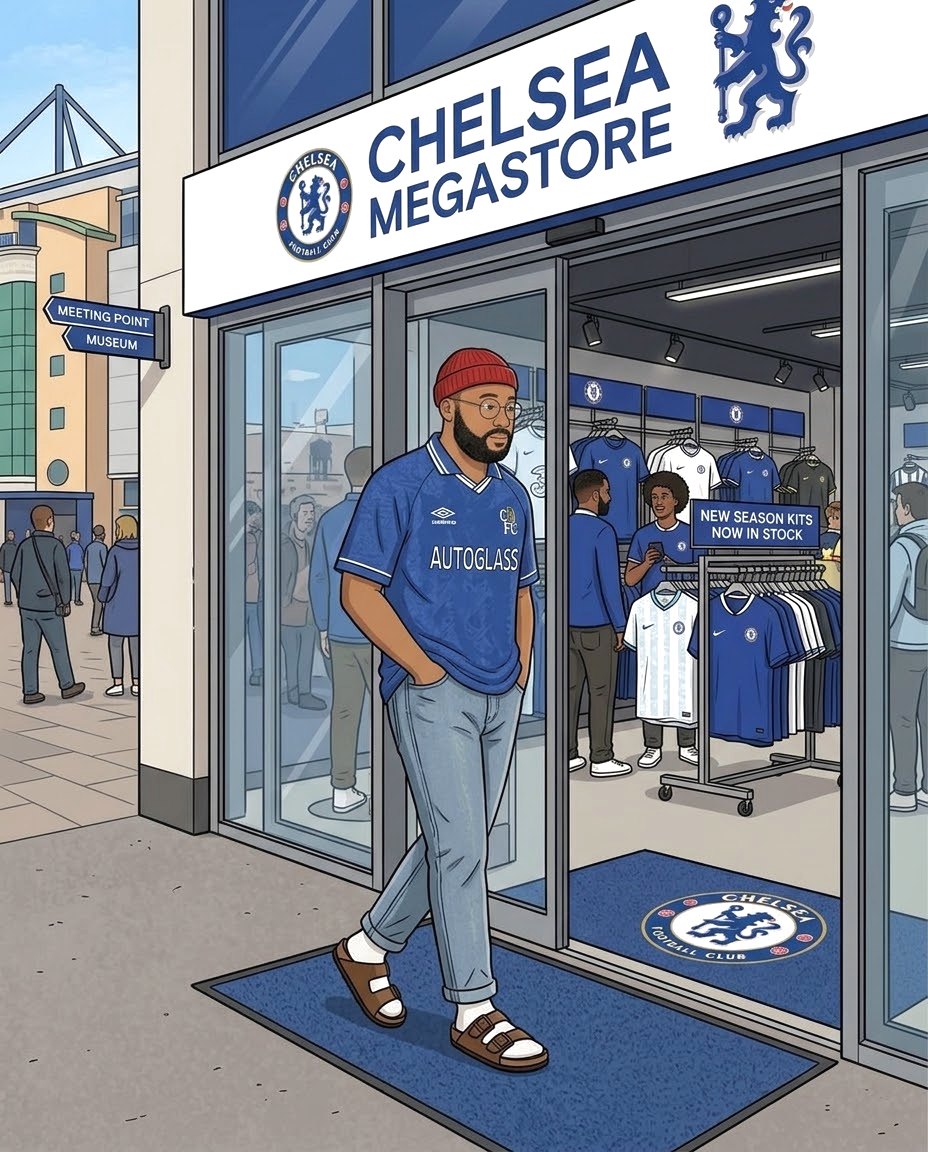
Say a fan buys a Chelsea shirt online for £100. That doesn’t mean Chelsea has £100 of revenue. To work out what Chelsea earned, you need to know who sold the shirt to the fan. Who owned the stock, who handled delivery, and what Chelsea is owed under the deal.

If Chelsea earns a commission or royalty on the sale, its revenue could be far smaller than the £100 the fan sees at checkout.
This is why I like looking at things through quote to cash. The checkout page shows you one step, from the fan’s side. The accounts have to follow the whole thing. The fan clicks buy. The order gets processed and shipped. Revenue is recognized, what Chelsea is owed gets recorded, and the cash reaches Chelsea. Those steps rarely happen on the same day.
Behind that one £100 payment there could be an e-commerce platform, a merchandising partner, a manufacturer, a delivery company, Chelsea and the tax authorities. So I’d draw it as a chain. Each one takes its share along the way.
The transfer fee isn’t the profit
Player sales are probably the easiest place to see a big number and think you know what happened. If Chelsea sells a player for £40 million, it’s natural to assume Chelsea made £40 million. Usually it didn’t.
When Chelsea buys a player, his registration goes on the balance sheet as an asset. The cost gets spread over his contract. That’s amortization. By the time he’s sold, a lot less of it may be left on the books.
Say Chelsea bought a player for £40 million and, by the time it sells him, £10 million is still on the books. If it sells him for £40 million, the accounting profit is about £30 million, before agents’ fees and other selling costs.
Or move the sliders yourself.
Bought for £40m on a four-year contract, sold three years in for £40m. £10m is left on the books, so the accounting profit is about £30m.
Then there’s a second gap, between the profit and the cash. Buying clubs often pay in installments. So Chelsea can book the profit while it’s still waiting on some of the money.
So the journey looks like this:
Transfer feecarrying amountaccounting resultreceivablecash
The player’s gone and the profit’s booked. The cash might still be on its way.
Angelo is a real example. Chelsea signed him from Santos in 2023 and loaned him to Strasbourg. In 2024 he moved permanently to Al-Nassr.
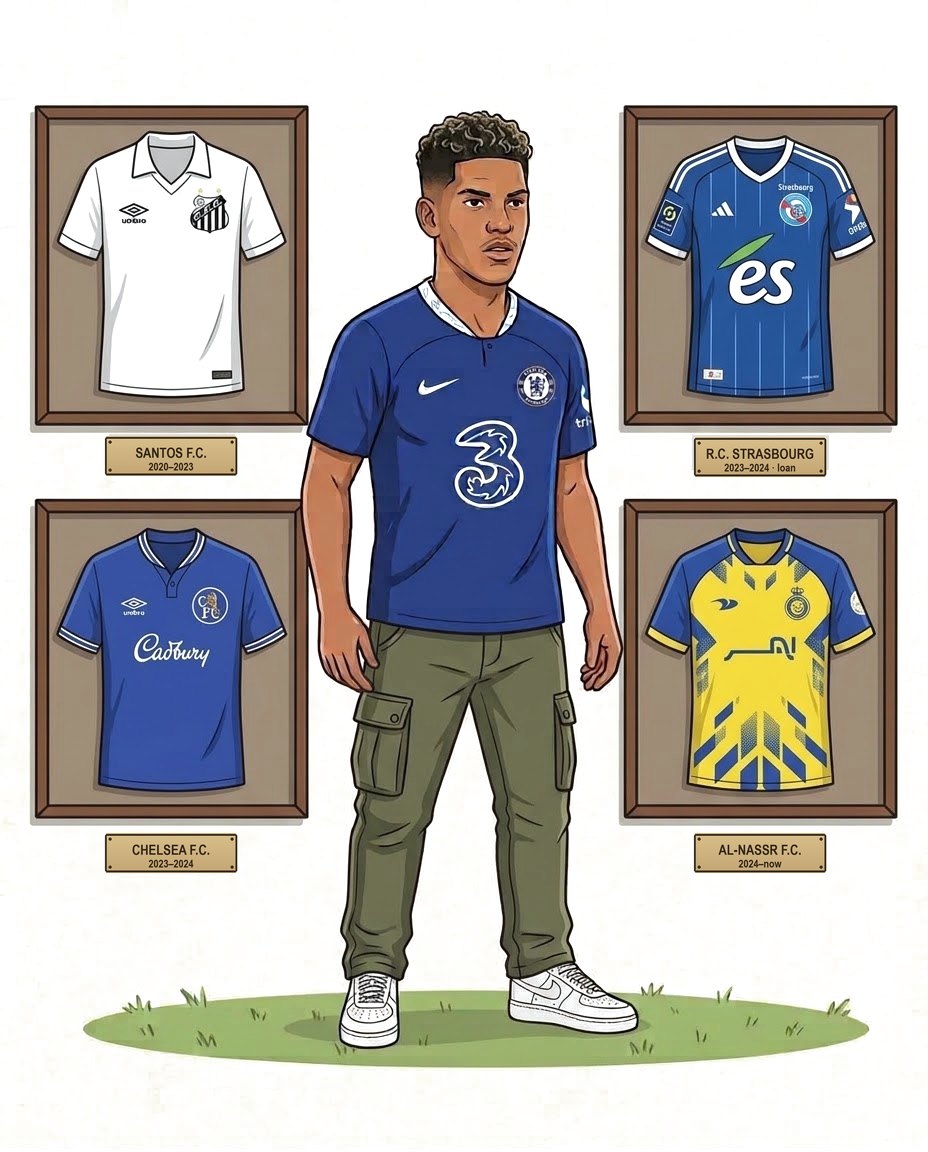
Underneath the fee there’s an asset. Chelsea bought his registration and it sat on the balance sheet, shrinking each year as the cost was amortized. Then Chelsea sold it. The accounting result is the sale price minus what the registration was still worth on the books.
When Chelsea actually gets paid is a separate question. It can have a different answer.
Conor Gallagher is the opposite case. He came through Chelsea’s Academy and had been at the club since he was a boy before breaking into the first team.

When he joined Atlético Madrid in 2024, there was no big fee sitting on Chelsea’s books for him. So almost all of the fee could show up as profit. That’s why selling Academy players looks so different in the accounts.
The cash question is the same, though. If the buyer pays in installments, some of the money sits as a receivable long after the player has gone.
Where is the money now?
Once you start asking where the money is, the accounts stop looking like a wall of numbers. They look like lots of small journeys, each with its own timing. Quote to cash is following each one until the money reaches the bank.
For a long time Chelsea was players, matches and transfer fees to me. Now I watch the same club and see hundreds of transactions at once. A sponsorship being delivered. A supplier waiting to get paid. A transfer fee still coming in for a player who’s already gone.
So next time you see a big number in Chelsea’s accounts, ask where the money is now.
Contractrevenuereceivablecash
Cashinventorysalecash
Expensepayablecash out
They all end at the bank. Some just take a lot longer to get there.
special thanks to Arsenal, our most loyal customer
- Chelsea FC, financial results 2024/25. ↩
- Chelsea FC, Legora partnership. ↩
- Numbers in pen are made up, just to show how it works. The deal’s real value isn’t public. ↩
- Chelsea FC, Fanatics partnership. ↩
The last reader left you this
Leave a note for whoever reads this next.
Read next: The Best Place to Build Might Not Be the Best Place for You · more essays

Written by Kyle Rowley
Founder, operator, former pro basketball player. I write about revenue, building things and sports.
I send one of these most Thursdays, if you’d like to follow along.
If it’s not adding anything, unsubscribing takes one click.
See more from me